Service charges on Dubai properties are the yearly fees every owner of an apartment, townhouse or villa in a shared building or community pays for running, maintaining and insuring the parts everyone uses. You work out your own bill with one sum: the area of your unit as recorded on your title deed, multiplied by the rate per square foot that RERA has approved for your building.
The owner pays, not the tenant, unless the lease says otherwise, and the rate is public: every approved figure sits in the Dubai Land Department's service charge index. The rules below come from Dubai Law No. 6 of 2019 on jointly owned property, checked in November 2026.
A service charge is the yearly fee every owner in a shared building or gated community pays to the body that manages it for running the parts of the property that everyone uses: lobbies, lifts, corridors, pools, gyms, security, cleaning, landscaping, building insurance and a reserve for future repairs. It is set per square foot of your unit, approved by RERA, the Real Estate Regulatory Agency of the Dubai Land Department, and it is the owner's bill, not the tenant's.
The law defines it in almost those words. Law No. 6 of 2019 calls service charges the annual charges collected from owners to cover the cost of management, operation, maintenance and repair of the common parts. It applies across the whole emirate, including free zones and special development zones.
It is not the same as your DEWA bill for electricity and water inside your home, and it is not a property management fee. Those are separate costs, covered further down this page.
The process is the same in every registered building, whichever developer built it:
Behind the scenes the money runs through Mollak, the RERA system that holds service charge accounts. The reserve has to sit in a separate account from the day to day service charge account.
The law sorts jointly owned property into three groups. In major projects, the developer manages the common parts. In hotel projects, the developer must hand management to a hotel project management company. In everything else, RERA selects and contracts a specialised management company. Each building also has an owners committee, which checks that the manager is doing the work and reviews the yearly maintenance budget. You will still see the older term "owners association" everywhere, including on this site; the 2019 law moved its role to the management entity and the owners committee.
Article 30 of the law lists what the service charge account may be spent on, and nothing else:
| Item | What it means in practice |
|---|---|
| Cleaning | Lobbies, corridors, car parks, pool decks and other common parts |
| Security and safety | Guards, CCTV, fire and life safety systems |
| Operation, maintenance, repair and improvement of common parts | Lifts, central air conditioning plant, pumps, lighting, landscaping, pools and gyms |
| Building insurance | The policy on the whole property, taken out by the manager |
| Audit fees | The yearly audit of the service charge accounts and budget |
| Management company fee | In the amount and method RERA sets |
| Developer's administrative costs | On major projects, where RERA approves them |
| Reserve fund | Cash for emergencies and for replacing equipment in the common parts |
| Inspection and oversight fees | Fees for inspecting or overseeing the property |
| Other approved costs | Anything else set out in the master community declaration and approved by RERA |
What it does not cover is anything inside your own unit. That is the maintenance bill, which we deal with in its own section below.
Building service charges. Specific to one building: its corridors, lobbies, lifts, gym, pool and the building's own systems.
Master community charges. The law calls these usage charges. The master developer of a large community can collect them from owners for the shared facilities of the whole community, such as parks, roads, lakes and community security. They apply to completed buildings, buildings under construction and vacant land. Examples of master communities include Dubai Marina and Emirates Living. A flat in a master community can carry both a building charge and a share of the community charge.
Common area utilities. Water and electricity used in lobbies, car parks and gardens is a running cost of the common parts, so it is paid out of the service charge.
Reserve or sinking fund contributions. Part of the service charge builds a cash reserve for major repairs and replacements, so that owners are not asked for a lump sum when a lift or chiller wears out. If the reserve is not enough in an emergency, the law lets owners be asked to cover the cost, with RERA's prior approval.
| Situation | Who pays | Basis in Law No. 6 of 2019 |
|---|---|---|
| You own and live in the unit | You, the owner | Article 25: each owner pays their share of the annual service charges |
| You own the unit and rent it out | You, the owner, unless the lease says the tenant pays | Article 16: the owner stays liable even if a tenant who agreed to pay does not |
| The unit is still unsold | The developer | Article 25: the developer pays the share of unsold units |
| You bought off-plan and the contract makes the developer pay for a period | The developer, for that period | Article 25: the developer pays where the sale contract makes it responsible |
On a standard Dubai tenancy the tenant does not pay the service charge, which is why it needs to come out of your rental yield when you work out what a unit really returns.
The sum is always the same: registered area in sq ft × approved rate per sq ft = the yearly charge. The law says your share is calculated on the area of your unit as recorded in the Real Property Register, which is the area on your title deed. Many management companies bill it in quarterly instalments, so divide by four to see each bill.
Look up the building by name in the DLD service charge index, take the approved rate per square foot, and multiply it by your unit's area as written on your title deed. Use the title deed figure, not the size in the marketing brochure, because that is the figure the charge is calculated on.
The rates below are examples only, chosen to show the arithmetic. Use the approved rate for your own building from the index.
| Home | Area on title deed | Example rate | Yearly charge | Each quarter |
|---|---|---|---|---|
| Studio in a mid market block | 450 sq ft | AED 12 | AED 5,400 | AED 1,350 |
| 2 bedroom flat with pool and gym | 1,200 sq ft | AED 18 | AED 21,600 | AED 5,400 |
| 4 bedroom villa in a gated community | 3,000 sq ft | AED 5 | AED 15,000 | AED 3,750 |
The law has no separate rule for balconies. The charge follows the area registered for your unit, so a balcony or terrace counts if it is included in the area on your title deed, and does not if it is not. How a building's units are measured is fixed when the project is registered, so the answer differs from building to building. Compare the area on your title deed with the area on your service charge invoice; if they do not match, ask the management company to explain before you pay.
Every registered building has a rate approved by RERA and published in the Dubai Land Department's service charge index. The index is the number that matters: a manager cannot simply invoice whatever it likes, and a bill that does not match the approved rate is worth questioning before you pay it.
The same figures can be looked up through the DLD's Dubai REST app. You choose the project, the use and the year, and the index shows the approved rate per square foot. We have a separate step by step guide to how to read the service charge index, so we do not repeat it here. Our guide on the DLD, RERA and the Dubai REST app explains which body does what, and how to check service charges before you buy walks through the questions to ask alongside the index.
Because the charge follows the building, not the flat. A 1,000 sq ft unit in a tower with a pool, a gym, a concierge desk and several lifts costs far more to run than the same 1,000 sq ft in a walk up with a cleaner. The second reason is the reserve, the money set aside for replacing lifts, chillers and roofs. Buildings that fund it properly charge more now and are less likely to need emergency contributions from owners later.
Other factors that move the rate:
Our guide to why service charges vary between buildings explains the gaps in more detail.
Apartments carry the widest spread of service charges in Dubai, because two towers in the same street can offer completely different levels of service. As a broad guide to where buildings sit relative to each other:
| Type of building | Where the rate usually sits | What the money goes on |
|---|---|---|
| Simple mid market apartment block | Lower end of the market | Cleaning, lifts, security, insurance, the reserve |
| Building with a pool, gym and concierge | Middle of the market | The above plus leisure facilities and more staff |
| Prime and branded towers | Top of the market | Full service operation, valet, extensive common areas |
Within any one community, the rate is set building by building. Always look up the approved rate for the exact tower in the index, not a community average or a figure from an advert.
If you searched for Dubai Properties, the developer behind communities such as Jumeirah Beach Residence and Arjan, its buildings follow exactly the same rules as every other developer's: a budget is prepared, an approved auditor checks it, RERA approves a rate, and the rate appears in the index. Payment goes to the building's management company, not to the developer's sales office.
A villa owner usually pays two separate things. The first is the community service charge, for the roads, landscaping, security and shared facilities of the gated community, calculated the same way as above on the registered area. The second is everything inside the plot, which the owner pays for directly: air conditioning servicing, the garden, the pool, the roof and exterior paint. The first is predictable and billed; the second depends on the age and size of the house, so budget for it separately. Our guide to what it costs to run a villa in Dubai covers the full list, and townhouse or villa compares the two.
The rules do not change. Law No. 6 of 2019 applies to jointly owned property everywhere in Dubai, including free zones and special development zones, so an apartment on an island or the waterfront is billed the same way as one inland: registered area times the RERA approved rate.
What changes is the budget behind the rate. Island and waterfront communities often have a master developer collecting a community charge on top of the building charge, for roads, beaches, marinas, breakwaters and community security, and buildings next to the sea tend to spend more on facade, metalwork and pool upkeep. Shared amenities such as beach clubs and marinas add convenience, and they add to the budget. When you compare a coastal apartment with an inland one, compare the total of building plus community charges per square foot, and take both off the rent before you compare returns.
The service charge pays for the shared parts of the building. Maintenance inside your own apartment is a separate cost that the owner pays directly. Budget for:
If the flat is let, who pays for which repair is set by the tenancy contract. Our guide to maintenance in a Dubai rental covers the usual split between landlord and tenant.
Prime and branded towers sit at the top of the scale. The reasons are what you would expect: a full hotel style service operation, valet parking, concierge, extensive common areas and, in branded residences, the operator's own service standards. Where the building is run as a hotel project, the law requires management to be handed to a hotel project management company.
Because these units are large, the yearly bill grows quickly: the same rate on a 3,000 sq ft apartment costs three times what it does on a 1,000 sq ft one. That is why, at the top of the market, the service charge deserves as much scrutiny as the purchase price. Ask what the operator's services include, whether the charge covers chilled water, and how the reserve is set. Our guide to luxury property in Downtown Dubai covers the towers where these charges are most common.
These two are often confused, and they are paid to different people for different things.
| Service charge | Property management fee | |
|---|---|---|
| Paid to | The building's management entity | The agency you hire to manage your own unit |
| Pays for | The shared parts of the building or community | Finding and managing a tenant, collecting rent, arranging repairs inside your unit |
| How it is set | Per square foot, approved by RERA | Usually 5 to 8 percent of annual rent on a long term let, or a flat fee (our guide, October 2026) |
| Optional? | No, every owner pays it | Yes, you choose whether to use a manager |
A property manager does not pay your service charge for you unless you have agreed that they will. See what property management costs in Dubai for the detail.
Owners outside the UAE, in the UK or anywhere else, pay the same way as owners in Dubai: to the building's management company, whose approved budget sits in the Dubai Land Department's Mollak system. Bills are usually sent by email and can be paid online or by bank transfer, so you do not need to be in the country. If you let the property, the charge stays with you as the owner, not the tenant, and it is worth building it into the rent you ask. Our property management page covers what else changes when you own from abroad, and buying property in Dubai from overseas covers the purchase itself.
The consequences are set out in the law, and they are serious:
The same rules apply to community charges owed to a master developer. If you are buying, check for arrears before you sign, because they block the transfer; see the legal process of a property transfer.
For the rules behind the bill, see owners associations and service charges.
Service charges keep the building working. A well managed development with regular maintenance stays attractive to tenants and buyers, while neglected lifts, pools and facades make a unit harder to let or sell. A charge that looks low can be a warning sign if the reserve is empty or maintenance has been put off.
A one bedroom flat let at AED 90,000 a year with a service charge of AED 15,000 earns AED 75,000 before any other cost, a sixth less than the headline rent. Work out the net figure before you buy, not after: rental yields by community shows what is left after running costs.
Townhouse or villa, which is better to have a comfortable living in Dubai?
Sustainable Living in Dubai: Best Green Communities in the City
Buying or renting in Dubai?
Ask one of our agents on WhatsApp about the service charges for a building you are looking at.
Ask one of our agents on WhatsApp about the service charges for a building you are looking at.
They are the yearly fees an owner pays for running, maintaining, insuring and repairing the shared parts of a building or community: lobbies, lifts, pools, gyms, security, cleaning and a reserve for future repairs. The rate is set per square foot, approved by RERA and published in the Dubai Land Department service charge index.
Multiply the area of your unit as recorded on your title deed by the rate per square foot RERA has approved for your building. A 1,000 sq ft flat at an approved rate of AED 15 per sq ft pays AED 15,000 a year. Use the approved rate from the index, not a figure from an advert.
In the Dubai Land Department service charge index, available on the DLD website and in the Dubai REST app. You choose the project, the use and the year, and the RERA approved rate appears. If an invoice does not match it, ask the management company to explain before paying.
The owner. Under Dubai Law No. 6 of 2019 the owner is liable unless the lease says otherwise, and stays liable even if a tenant who agreed to pay does not. On a standard tenancy the tenant does not pay, so take the charge off the rent when you work out your yield.
The management entity has a lien on the unit, so it cannot be sold or transferred until the charges are paid. After a RERA approved notice and 30 days, the debt can be enforced by the execution judge, who may order the unit sold at public auction. Always check for arrears before buying.
Yes. Villa owners in a gated or master community pay a service charge for the roads, security, landscaping and shared facilities, calculated on the registered area. Maintenance inside their own plot, such as air conditioning, the garden and the pool, is paid directly and is not part of the service charge.
Only if they are included in the area registered for your unit. The law bases each owner's share on the unit area recorded in the Real Property Register, which is the area on your title deed, so compare that figure with the area on your invoice.
Handpicked for you

AED 2M
Resale at OP | Lagoons and Dubai Skyline Views | High Floor
1 bed · 788 sq.ft
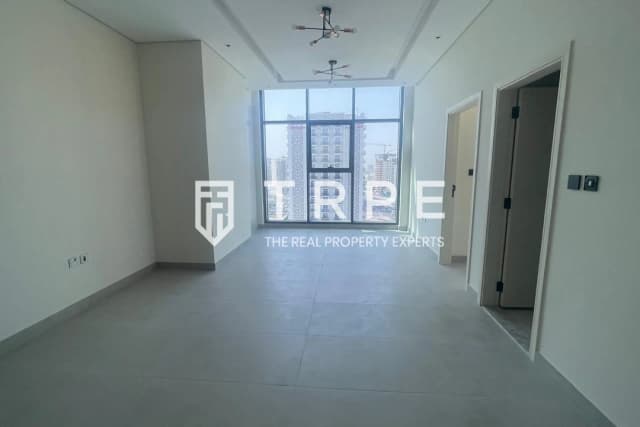
AED 110K/year
Community View | Upgraded | PG One, Al Furjan
1 bed · 830 sq.ft
AED 1.6M
Vacant | 710 sq ft | Binghatti Avenue, Al Jaddaf
1 bed · 863 sq.ft
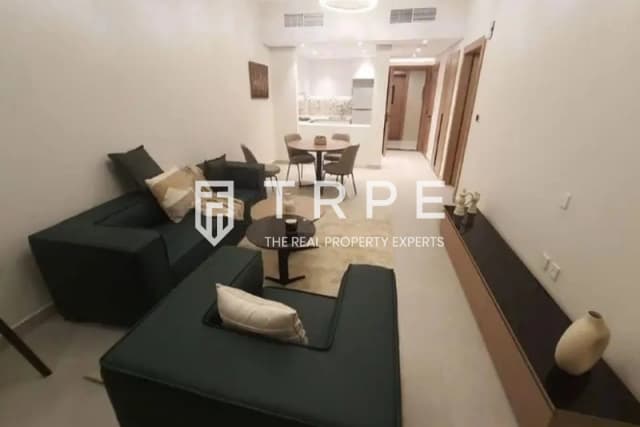
AED 75K/year
Furnished 1BR | Brand New | JVC District 16, JVC
1 bed · 862 sq.ft


Join our newsletter. No spam, unsubscribe anytime.
Contact
+971 50 523 2712info@trpe.aeQuick links to the most-searched combinations across Dubai.
TRPE Real Estate is a company registered in Dubai, United Arab Emirates. Trade License No. 999314 · RERA ORN 28357 · Office 1201, Ascott Park Place, Sheikh Zayed Road, Dubai. Regulated by the Real Estate Regulatory Agency (RERA).