Yes, expats can get a mortgage in Dubai, and you do not need to be a UAE resident to apply. As of October 2026, a resident expat buying a first home worth up to AED 5 million can usually borrow up to 80 percent of the price, which means a 20 percent deposit. Non-residents can borrow too, but banks set their own, lower limits for them. The deposit and every closing cost must be paid in cash, because banks lend against the property price only.
The UAE Central Bank sets the maximum loan to value (LTV) that banks may lend to expat residents. The figures below are the Central Bank caps as published in its mortgage regulations and its 2025 Financial Stability Report, as of October 2026. Individual banks can lend less than the cap.
| Purchase | Maximum loan | Minimum deposit |
|---|---|---|
| First home, price up to AED 5 million | 80% | 20% |
| First home, price above AED 5 million | 70% | 30% |
| Second or later home, any price | 60% | 40% |
| Off-plan property, any price | 50% | 50% |
The off-plan limit applies while the property is still being built. Some lenders only offer a mortgage on off-plan units close to completion, so ask each bank before you reserve. If you would rather avoid a loan during construction, buying on installments explains how developer payment plans work.
These examples apply the caps above. They show the deposit only, not the closing costs, which come on top.
| Price | Buyer type | Loan | Cash deposit |
|---|---|---|---|
| AED 1,000,000 | Resident, first home | AED 800,000 | AED 200,000 |
| AED 2,000,000 | Resident, first home | AED 1,600,000 | AED 400,000 |
| AED 2,000,000 | Resident, second home | AED 1,200,000 | AED 800,000 |
| AED 2,000,000 | Off-plan | AED 1,000,000 | AED 1,000,000 |
| AED 6,000,000 | Resident, first home | AED 4,200,000 | AED 1,800,000 |
Yes, some UAE banks lend to non-residents, but there is no single national rule to quote. Lenders usually offer a lower LTV than for residents, ask for more paperwork on your income and assets abroad, and may price the loan higher. Ask each bank for its non-resident LTV in writing before you rely on a figure. If you live overseas, our guide to buying property in Dubai from overseas covers the rest of the process.
Lists vary by bank. Ask for the lender's checklist at the start so you can gather everything once.
Most Dubai mortgages offer a fixed period, commonly of one to five years, after which the loan moves to a variable rate linked to EIBOR, the Emirates Interbank Offered Rate, plus the bank's margin. Fixed gives certainty while you settle in. Variable can fall if market rates fall, and can rise too. Whatever you choose, ask what the rate becomes after the fixed period ends, because that is the rate you will pay for most of the loan. For what lenders are charging right now, see our page on Dubai mortgage rates for expats. Rates change often, so we do not print them here.
Buying with a loan has two sets of costs: the usual purchase costs, and the charges for the mortgage itself.
| Cost | Amount | Source |
|---|---|---|
| Mortgage registration | 0.25% of the loan | Dubai Land Department |
| Title deed issuance | AED 250 | Dubai Land Department |
| Knowledge fee and innovation fee | AED 10 each | Dubai Land Department |
| Service partner (trustee) fee | AED 4,000 plus VAT | Dubai Land Department |
| Bank arrangement fee, valuation fee and insurance | Set by the bank | Your offer letter |
The official registration page for a mortgage is on the Dubai Land Department website. Beyond the mortgage, you also pay the 4 percent transfer fee, the trustee office fee and agency commission on a resale. Our guide to Dubai Land Department fees lists them all. Budget roughly 7 to 8 percent of the price in total costs when you borrow.
With an 80 percent loan, the loan is AED 1,600,000 and the mortgage registration fee at 0.25 percent is AED 4,000, plus the fixed fees above. The deposit is AED 400,000, and the 4 percent transfer fee alone is AED 80,000. All of this is paid from your own cash.
The loan is calculated on the lower of the price and the valuation. Say you agree to pay AED 2,000,000 and the bank values the home at AED 1,900,000. An 80 percent loan is then AED 1,520,000, not AED 1,600,000, so you must find AED 80,000 more in cash. Ask your adviser how likely a low valuation is for the building you are buying, and keep a cash buffer for it.
You can go to banks directly, but a broker compares several lenders at once and handles the paperwork. Read whether you need one in our page on whether you need a mortgage broker. Whichever route you take, ask for every fee in writing.
Yes, but the seller's loan has to be settled and released at transfer, which adds steps. We explain the process in buying a Dubai property that has a mortgage on it.
Off-plan payment plans spread the cost across construction without a bank. See current off-plan projects, or read how installment plans work. If you are new to the market, start with buying property in Dubai as a foreigner.
Browse homes for sale once you know your budget, or speak to an adviser. The Central Bank publishes the lending limits in its mortgage regulations. Check them and your lender's own terms before you commit, because rules and rates can change.
See how to buy to let mortgages.
Buying or renting in Dubai?
Ask one of our agents on WhatsApp about buying in Dubai: areas, costs and the process.
Ask one of our agents on WhatsApp about buying in Dubai: areas, costs and the process.
Yes. As of October 2026, UAE Central Bank limits let a resident expat borrow up to 80 percent of the price on a first home up to AED 5 million, and 70 percent above that. Second homes are capped at 60 percent and off-plan at 50 percent. Non-residents can apply, but each bank sets its own lower limit.
No. Banks lend against the property price only. The deposit and all closing costs, such as the 4 percent transfer fee and the mortgage registration fee, must be paid in cash.
Each bank sets its own minimum salary, so ask for it before applying. The Central Bank limits your total debt repayments, including cards and car loans, to 50 percent of your monthly income.
For a resident expat buying a first home up to AED 5 million, the minimum deposit is 20 percent. It is 30 percent above AED 5 million, 40 percent on a second home and 50 percent on off-plan property.
The Dubai Land Department charges 0.25 percent of the mortgage value, plus AED 250 for the title deed, AED 10 knowledge fee and AED 10 innovation fee. A service partner fee of AED 4,000 plus VAT applies when you register through a trustee centre.
Fixed rates give certainty for the first period, commonly one to five years. After that the loan moves to a variable rate linked to EIBOR. Check what the rate becomes after the fixed period, because that is what you pay for most of the loan.
Some UAE banks lend to non-residents, usually at a lower loan to value than for residents and with more documents. Ask each bank for its non-resident terms in writing.
Handpicked for you

AED 1.6M
Vacant | 710 sq ft | Binghatti Avenue, Al Jaddaf
1 bed · 863 sq.ft
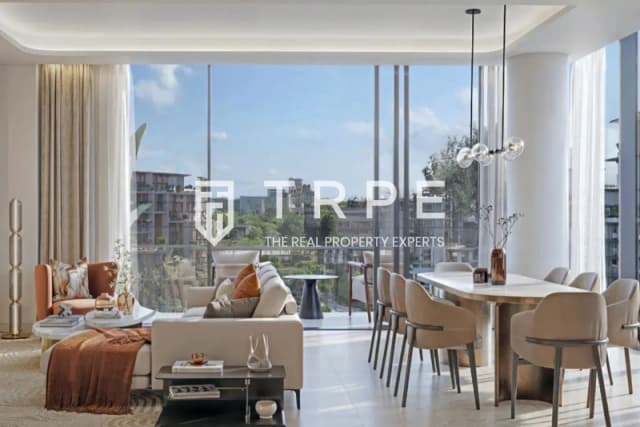
AED 2.3M
Boulevard View | Premium Finishes | Prime Location: City Walk
1 bed · 789 sq.ft
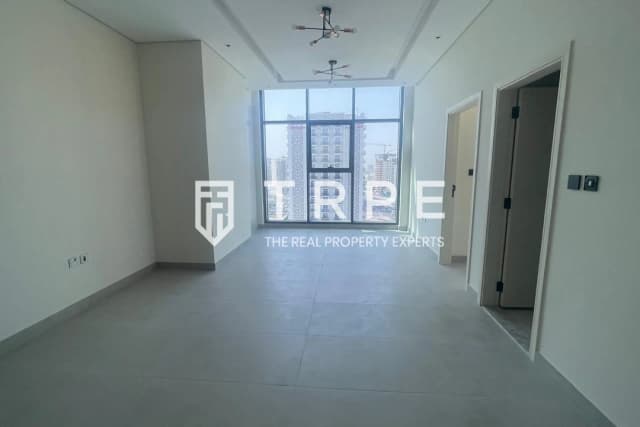
AED 110K/year
Community View | Upgraded | PG One, Al Furjan
1 bed · 830 sq.ft

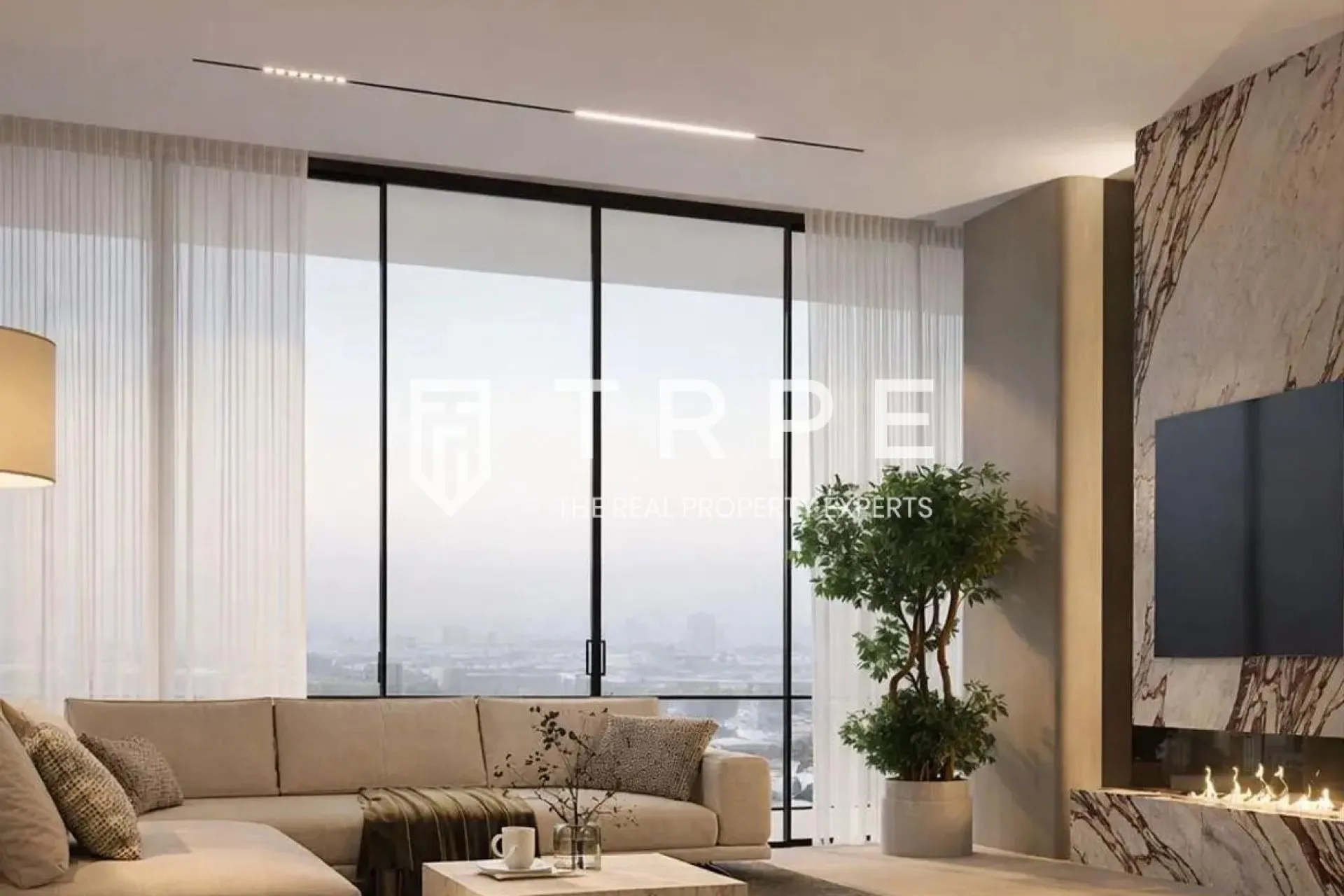
AED 2M
Resale at OP | Lagoons and Dubai Skyline Views | High Floor
1 bed · 788 sq.ft


Join our newsletter. No spam, unsubscribe anytime.
Contact
+971 50 523 2712info@trpe.aeQuick links to the most-searched combinations across Dubai.
TRPE Real Estate is a company registered in Dubai, United Arab Emirates. Trade License No. 999314 · RERA ORN 28357 · Office 1201, Ascott Park Place, Sheikh Zayed Road, Dubai. Regulated by the Real Estate Regulatory Agency (RERA).