When you buy a Dubai property with a tenant in it, the lease comes with it. Under Article 28 of Dubai's tenancy law, a change of owner does not affect a fixed-term tenant's right to stay. You collect the rent from completion, but to move in yourself you must wait for the lease to end and give 12 months' notice.
Buying tenanted is normal and often sensible, because income starts on day one. What surprises buyers is that the tenancy carries on as it stands, including its rent and its end date, and not on terms you would have chosen. This guide covers what you inherit, when and how you can take the property back, and what to check before you make an offer. The rules come from Law 26 of 2007 on landlord and tenant relations, as amended by Law 33 of 2008.
The existing contract, at the existing rent, until it expires. Article 28 of Law 26 of 2007 says that transferring ownership to a new owner does not affect the tenant's right to keep occupying the property under the lease signed with the previous owner, provided the lease has a fixed term. A sale does not reset the tenancy or give you a fresh negotiation. If the tenant is paying below current market rates, that is now your income, and any increase has to follow the normal rules. Our guide on how rent increases are calculated explains the limits.
You also inherit the practical position: the deposit held, any arrears, any dispute in progress, and any promises the previous owner made informally.
Not straight away, and this is the point most buyers misjudge. Article 25(2) of the law, as amended in 2008, lets a landlord seek eviction when the lease expires only for set reasons. One of them is that the owner wants the property for their own use or for a first-degree relative, provided the owner proves they do not own another suitable property. The landlord must give the tenant at least 12 months' notice before the eviction date, served through a notary public or by registered mail.
Two consequences follow. First, notice runs to the end of the lease, so if you buy with eight months left on the contract, you cannot simply serve notice and move in at the end of those eight months. Second, if the tribunal rules in favour of an owner taking a home back for own use, Article 26 bars the owner from letting it to someone else for at least two years for residential property. If your plan is to live in the property, check the contract end date and whether any notice has already been served before you make an offer, not after.
The same Article 25(2) also allows eviction at the end of the lease when the owner wants to sell the property, again with at least 12 months' notice through a notary public or by registered mail. So a seller who wants to hand over the home empty has to plan a year ahead. If a seller tells you the tenant "will be out by completion", ask to see the notarised or registered notice and its date. Without it, assume the tenant stays.
Only at renewal and only within the rules. Either party who wants to change the terms or not renew must tell the other at least 90 days before the lease ends (Article 14). Increases are capped by Decree 43 of 2013: from 0% to 20%, depending on how far the current rent is below the RERA rental index for similar homes. You can check the index on the DLD's Rental Index service.
Article 20 lets a landlord take a security deposit to cover maintenance and requires the landlord to refund it, or what is left of it, when the lease ends. When you become the landlord, that refund becomes your obligation. Agree in writing that the seller hands the deposit over to you on completion, or that the price is reduced by the same amount. If it does not transfer, you will be funding its return later.
No. The DLD registers a tenanted sale like any other. Its property sale registration page lists the 4% transfer fee (2% buyer and 2% seller by default, with the contract deciding who pays), title deed fees and the trustee office fee. Our guide to Dubai Land Department fees sets out the full list.
Sometimes, and for a rational reason: the pool of buyers is smaller because anyone wanting to move in soon is excluded. If the rent is below market, that discount is often justified. If the rent is strong and the tenant is reliable, a tenanted unit can be worth more to an investor than an empty one, because there is no void period and no letting cost.
For an investor, buying tenanted is usually the easier path: income from completion, no marketing, no empty months. For someone who wants to live in the property, it is a timing problem that has to be understood before the offer, and occasionally a reason to walk away. Tell us which you are and we will tell you what the tenancy is actually worth: talk to us.
This guide summarises Dubai's tenancy law as published on the Dubai Legislation Portal, read on 12 November 2026. It is not legal advice; for a specific dispute, take advice or contact the Rental Dispute Centre.
Buying or renting in Dubai?
Ask one of our agents on WhatsApp about renting in Dubai: areas, budgets and contracts.
Ask one of our agents on WhatsApp about renting in Dubai: areas, budgets and contracts.
Yes. Article 28 of Law 26 of 2007 says a change of owner does not affect a fixed-term tenant's right to stay under the lease signed with the previous owner. The buyer becomes the landlord on the existing terms.
At least 12 months before the eviction date, served through a notary public or by registered mail, and eviction can only take effect when the lease expires. The owner must also prove they own no other suitable property (Law 26 of 2007, Article 25(2), as amended by Law 33 of 2008).
Yes, at the end of the lease, if the owner gives at least 12 months' notice through a notary public or by registered mail. Ask the seller for a copy of the notice and its date.
The landlord at the end of the lease, which will be you. Make sure the seller transfers the deposit on completion or reduces the price by the same amount.

Own a home in Dubai? See what it is worth.
Free, instant valuation from real DLD transactions.
Handpicked for you
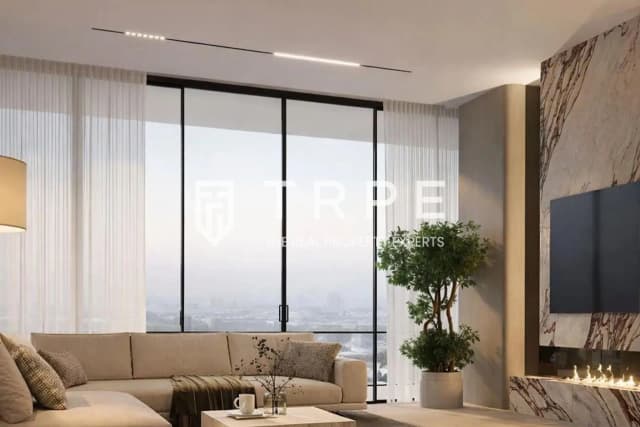
AED 1.6M
Vacant | 710 sq ft | Binghatti Avenue, Al Jaddaf
1 bed · 863 sq.ft

AED 2M
Resale at OP | Lagoons and Dubai Skyline Views | High Floor
1 bed · 788 sq.ft
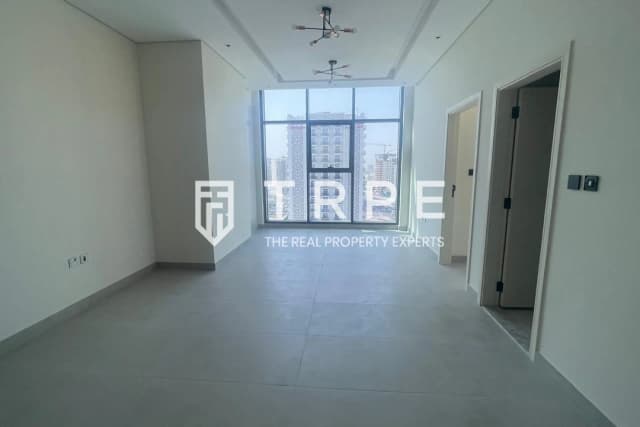
AED 110K/year
Community View | Upgraded | PG One, Al Furjan
1 bed · 830 sq.ft
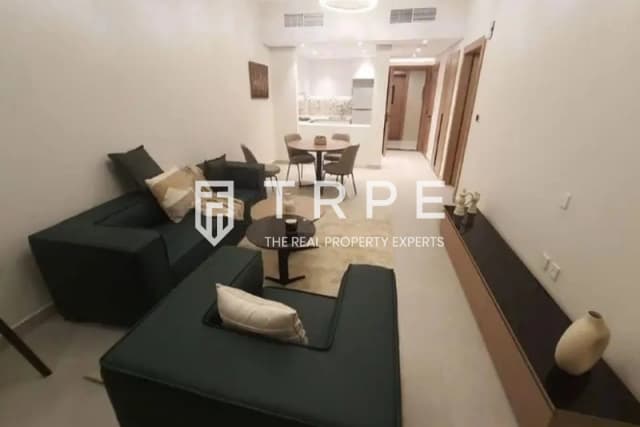
AED 75K/year
Furnished 1BR | Brand New | JVC District 16, JVC
1 bed · 862 sq.ft

Join our newsletter. No spam, unsubscribe anytime.
Contact
+971 50 523 2712info@trpe.aeQuick links to the most-searched combinations across Dubai.
TRPE Real Estate is a company registered in Dubai, United Arab Emirates. Trade License No. 999314 · RERA ORN 28357 · Office 1201, Ascott Park Place, Sheikh Zayed Road, Dubai. Regulated by the Real Estate Regulatory Agency (RERA).