If an off-plan project in Dubai is delayed, your sale and purchase agreement decides what happens: it sets the anticipated completion date and any grace period before compensation or termination rights apply. Your payments sit in a project escrow account under Law No. 8 of 2007, and if RERA cancels a stalled project, the developer must return buyers' payments.
Delays are common. Knowing what your contract actually says is the difference between a nuisance and a loss.
| Clause | What to look for |
|---|---|
| Anticipated completion date | The contractual date, not the marketing one |
| Grace period | How long after that date the developer has before a delay counts as late; the length varies by contract |
| Force majeure | What events excuse a delay |
| Compensation | Whether any is payable, and how calculated |
| Termination | At what point you can cancel and what you recover |
Generally not, however frustrating. Beyond it, your position depends on the contract and on whether the project is still progressing. A project running eight months behind is a very different situation from one where work has stopped.
This is where the law, not just the contract, protects you:
Our guide to what happens if a developer cancels a project covers the refund process in more detail.
You do not have to rely on the developer's emails. The DLD Project Status Enquiry shows a registered project's completion percentage when you search by land number, project number or project name. The Dubai REST app goes further for buyers: completion percentage, actual photos of the site, the project's escrow account number and the payments due from owners.
The buyer's side is set out in Article 11 of Law No. 13 of 2008 as replaced by Law No. 9 of 2009. If a buyer breaches the contract, the developer notifies the Dubai Land Department, which gives the buyer 30 days to put it right. After that, what the developer may do depends on how far the project has got:
| Project progress | What the developer may do if the buyer stays in breach |
|---|---|
| 80% or more complete | Keep all payments and claim the rest of the price, or ask for the unit to be sold at public auction |
| 60% to 80% | Terminate and keep up to 40% of the unit's contract value |
| Started, under 60% | Terminate and keep up to 25% of the unit's contract value |
| Not started, for reasons outside the developer's control | Terminate and keep up to 30% of the payments made |
Where the developer terminates at the 60% or under-60% stage, it must repay the balance due to the buyer within one year of termination or within 60 days of reselling the unit, whichever is earlier. This is why stopping payments because a project is late can cost more than the delay itself.
Inspect properly before accepting the keys. Our guide to snagging and handover sets out the checklist. After handover, Law No. 6 of 2019 keeps the developer liable for one year from handover for defective installations such as mechanical, electrical and plumbing work, and for ten years from the completion certificate for structural defects (Article 40).
Ask us what we know about a project's progress before you commit to it.
Before handover, hire an independent inspector; see how to choose a snagging company.
Buying or renting in Dubai?
Ask one of our agents on WhatsApp about off-plan projects, payment plans and handover.
Ask one of our agents on WhatsApp about off-plan projects, payment plans and handover.
Your contract decides. It sets the anticipated completion date and any grace period, and a delay inside the grace period is generally not treated as a breach. Read the exact length in your own contract and check the project's official completion percentage on the DLD Project Status Enquiry or in the Dubai REST app.
Take advice first. Missing an instalment can put you in breach even when the developer is behind, and under Law No. 9 of 2009 the developer may then keep part of what you paid, depending on how complete the project is. On construction-linked plans, payments fall due as milestones are reached, so a genuine stall pauses them automatically.
Choose construction-linked payments, check the developer's record on completed projects rather than announced ones, and confirm the project is registered with the DLD with payments going to its escrow account.
Yes. Under Law No. 9 of 2009, RERA may cancel a project on a reasoned report, and the developer must then return all payments received from buyers in line with the escrow law, Law No. 8 of 2007.
Payments into a project's escrow account are dedicated to that project, and the developer's creditors cannot seize them. If the project is not completed, the escrow agent must work with the Land Department to get it completed or refund buyers.

Own a home in Dubai? See what it is worth.
Free, instant valuation from real DLD transactions.
Handpicked for you

AED 1.6M
Vacant | 710 sq ft | Binghatti Avenue, Al Jaddaf
1 bed · 863 sq.ft

AED 2M
Resale at OP | Lagoons and Dubai Skyline Views | High Floor
1 bed · 788 sq.ft
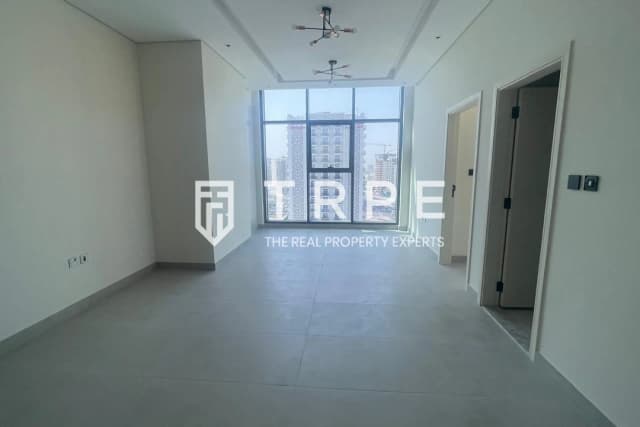
AED 110K/year
Community View | Upgraded | PG One, Al Furjan
1 bed · 830 sq.ft

AED 75K/year
Furnished 1BR | Brand New | JVC District 16, JVC
1 bed · 862 sq.ft


Join our newsletter. No spam, unsubscribe anytime.
Contact
+971 50 523 2712info@trpe.aeQuick links to the most-searched combinations across Dubai.
TRPE Real Estate is a company registered in Dubai, United Arab Emirates. Trade License No. 999314 · RERA ORN 28357 · Office 1201, Ascott Park Place, Sheikh Zayed Road, Dubai. Regulated by the Real Estate Regulatory Agency (RERA).