If a Dubai off-plan project is cancelled, buyers whose payments went into the project's registered escrow account are entitled to get them back. Under Dubai law the decision to cancel sits with RERA, and when it revokes a project the developer must return all payments received from buyers under the escrow procedure in Law No. 8 of 2007.
That is why escrow is the first question to ask, not a technicality. Payments made outside it, into a company account or to an individual, do not carry the same protection.
The Real Estate Regulatory Agency (RERA). Article 11 of Law No. 13 of 2008, as replaced by Law No. 9 of 2009, says RERA may, based on a reasoned report, decide to revoke a real estate development project. In that case the developer must return all payments received from purchasers in line with the escrow law.
The escrow law, Law No. 8 of 2007, also sets out when a developer is struck off the developers' register, including when it is declared bankrupt, when its licence is revoked, or when it fails without an acceptable reason to start construction within six months of being allowed to sell units off-plan.
If you paid into the project's escrow account, the law is on your side: a revoked project means the developer must refund buyers, and the money is held in an account tied to the project rather than in the developer's general funds. Article 15 of Law No. 8 of 2007 adds that where a project is not completed, the escrow agent must, after consulting the Dubai Land Department, take the measures needed to preserve depositors' rights and either see the project completed or have depositors refunded.
In practice the process is administrative and slower than most buyers expect, which is why complete records from the first payment matter.
A payment made outside that arrangement has none of these safeguards. That is the largest avoidable risk in Dubai off-plan buying.
Registration is not optional. Article 3 of Law No. 13 of 2008 says a sale of an off-plan unit is void unless it is entered in the Interim Property Register, which is the Oqood registration. The same law says a contract to sell off-plan in a project that has not been approved by the competent entities is null and void. See title deed and Oqood explained for how Oqood works.
The same Article 11 covers the reverse case. The developer must report the breach to the Land Department, which gives the buyer 30 days' notice to pay. If the buyer still does not pay, what the developer may keep depends on how far construction has gone:
| Project progress | What the developer may do |
|---|---|
| 80 percent or more complete | Keep all payments and claim the balance, or ask for the unit to be sold at public auction |
| 60 percent or more complete | Terminate and keep up to 40 percent of the unit's contract value |
| Construction started, below 60 percent | Terminate and keep up to 25 percent of the unit's contract value |
| Construction not started, for reasons beyond the developer's control | Terminate and keep up to 30 percent of the payments made |
In the 60 percent and below-60 percent cases, the developer must pay back the rest within one year of termination or within 60 days of reselling the unit, whichever comes first. Source: Law No. 9 of 2009.
No, and it would be misleading to suggest it should. Established developers in Dubai have long records of completing what they start, and the escrow and registration rules exist because the risk was taken seriously. But the protection depends on buying inside that framework, which is a choice you make at the point of purchase.
If you are looking at a project and want an honest read on the developer behind it, ask us before you pay anything. We would rather talk you out of one project than watch you into the wrong one.
Buying or renting in Dubai?
Ask one of our agents on WhatsApp about off-plan projects, payment plans and handover.
Ask one of our agents on WhatsApp about off-plan projects, payment plans and handover.
RERA. Under Article 11 of Law No. 13 of 2008, as amended by Law No. 9 of 2009, RERA may revoke a project based on a reasoned report, and the developer must then return all payments received from buyers under the escrow law.
If you paid into the project's registered escrow account, yes: a revoked project means the developer must refund buyers under Law No. 8 of 2007. Expect an administrative process, and keep every receipt showing which account you paid into.
Then the escrow protection does not apply to that money and you would be pursuing the developer company for it. Always check that payments go to the project's escrow account named in your sale agreement.
Only after the Land Department has given you 30 days' notice to pay. What the developer can then keep depends on construction progress, from up to 30 percent of payments made if work has not started, to all payments if the project is 80 percent complete.
Use the Dubai Land Department's Project Status Enquiry service, on its website or app, which shows the project's completion percentage and details.

Own a home in Dubai? See what it is worth.
Free, instant valuation from real DLD transactions.
Handpicked for you
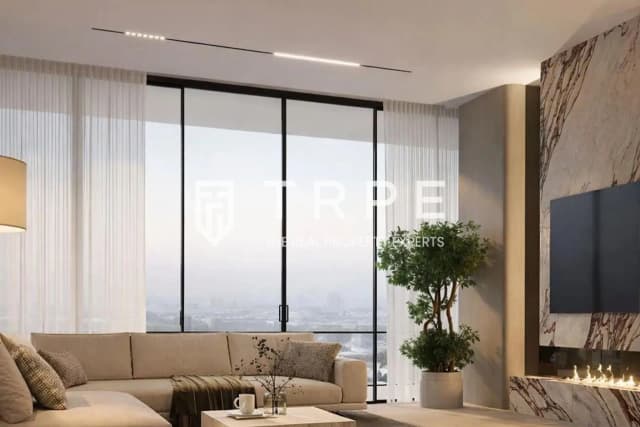
AED 1.6M
Vacant | 710 sq ft | Binghatti Avenue, Al Jaddaf
1 bed · 863 sq.ft

AED 2M
Resale at OP | Lagoons and Dubai Skyline Views | High Floor
1 bed · 788 sq.ft
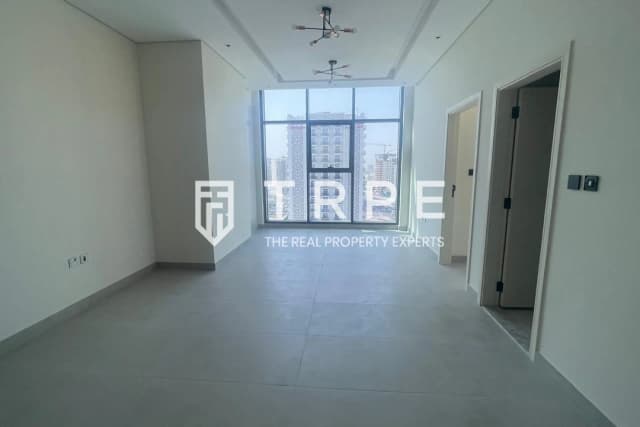
AED 110K/year
Community View | Upgraded | PG One, Al Furjan
1 bed · 830 sq.ft

AED 75K/year
Furnished 1BR | Brand New | JVC District 16, JVC
1 bed · 862 sq.ft


Join our newsletter. No spam, unsubscribe anytime.
Contact
+971 50 523 2712info@trpe.aeQuick links to the most-searched combinations across Dubai.
TRPE Real Estate is a company registered in Dubai, United Arab Emirates. Trade License No. 999314 · RERA ORN 28357 · Office 1201, Ascott Park Place, Sheikh Zayed Road, Dubai. Regulated by the Real Estate Regulatory Agency (RERA).