
In Dubai, the owners association's job is now split in two. Under Law No. 6 of 2019, a management entity, which is the developer or a RERA-recognised management company, runs the building, its utility services and its service charges, and an owners committee of resident owners checks its work. Shared utility services are paid for through the service charge.
Most owners ignore this until a bill arrives that they disagree with. This guide explains who does what, what the law counts as utility services, how service charges are set, how to challenge one, and what happens if you do not pay.
Owners associations were set up under Law No. 27 of 2007. Law No. 6 of 2019 on jointly owned real property repealed that law (Article 51) and transferred the associations' rights and obligations to management entities (Article 49). People still say "owners association" or "OA", and many statements still use the term, but the roles today are:
| Role | Who it is | What it does |
|---|---|---|
| Management entity | The developer, or a management company recognised by RERA | Manages, operates, maintains and repairs the common parts; collects service charges |
| Owners committee | Up to 9 owners appointed by RERA | Reviews budgets, checks the management entity's work, passes on complaints |
| RERA | The Real Estate Regulatory Agency, part of the Dubai Land Department | Approves service charge budgets, inspects buildings, can replace the management company |
The law defines utility services widely: water, gas, electricity, air conditioning, telephone, computer, television and telecommunication cables, sewerage, rainwater drainage, garbage and waste removal, mail and parcel delivery, and horticulture, plus any systems that improve the common facilities or common parts.
Utility services that serve the common parts or other units are not part of your unit (Article 9). They belong to the building and are run by the management entity, and their running costs come out of the service charge. Your own unit's consumption is different: electricity and water are billed to the occupant, and cooling is usually billed separately too, though some buildings include it in the service charge, so check.
Until RERA appoints a management company, the developer manages the building and must keep owners' service charges in the building's account. Service charge accounts are monitored through the DLD's Mollak system; see Mollak explained.
An owners committee is formed once at least 10% of the units are registered in their owners' names. It has up to 9 members appointed by RERA, who must be owners living in the building and up to date with their service charges, and it meets every three months (Articles 22 and 23). Its duties (Article 24) include:
The committee advises and escalates. It does not set the service charge itself.
Each owner pays a share of the annual service charge based on their unit's area, as recorded in the Real Property Register, compared with the total area of the building (Article 25). The developer pays the share for unsold units. No charge can be collected without RERA approval, and RERA approves a budget only after a certified audit firm has approved it (Article 27).
The approved rates per square foot for each project are published in the DLD's Service Charge Index. See our guide to the Service Charge Index.
| Line | What it means |
|---|---|
| Master community (usage charges) | Roads, landscaping and lighting outside your building, charged by the master developer |
| Building services | Lifts, cleaning, security, common area utilities |
| Reserve fund | Saved for major works such as lift replacement |
| Management fee | The managing agent's charge |
| Insurance and audit | Building insurance and the audit of the service charge accounts |
A building with a small reserve fund is not necessarily cheaper. If the reserve cannot cover an emergency, the DLD can, with RERA's approval, ask owners to pay for it directly (Article 30).
You cannot refuse to pay RERA-approved charges, or give up your share of the common parts to avoid them (Article 28). The management entity has a lien on the unit, and the unit cannot be sold until the charges are paid (Article 32), so the developer will not issue the No Objection Certificate needed for a sale. See the NOC explained and what happens on transfer day.
The management entity must first send a written notice giving 30 days to pay. After that, the claim can be enforced by the execution judge at the Rental Disputes Settlement Centre, who can order the unit sold at public auction. The management entity cannot, though, stop you using your unit or the common facilities to force payment outside these procedures (Article 29).
If you let the unit, the service charge stays your responsibility unless the lease says otherwise, and you remain liable if your tenant does not pay it (Article 16).
Ask for the current rate per square foot and check it against the Service Charge Index, ask whether a reserve fund exists and how much it holds, whether any special levy is planned, and whether an owners committee has been formed. Our guide to service charges sets out the normal ranges, and how to check service charges before you buy walks through the checks.
Ask us for the service charge history on a specific building before you commit.
Buying or renting in Dubai?
Ask one of our agents on WhatsApp about the service charges for a building you are looking at.
Ask one of our agents on WhatsApp about the service charges for a building you are looking at.
The term for the body that runs a building on behalf of its owners. Since Law No. 6 of 2019, the work is done by a management entity (the developer or a RERA-recognised management company), which collects service charges and maintains the common parts, while an owners committee of resident owners reviews budgets and passes on complaints.
Yes. Ask the management company for the RERA-approved budget and breakdown, compare the rate with the DLD Service Charge Index and similar buildings, and raise it with the owners committee. If the management entity does not deal with a complaint within 14 days, the committee can take it to RERA.
The management entity has a lien on the unit, and the unit cannot be sold until the charges are paid, so the developer will not issue the No Objection Certificate needed for a sale. After a 30-day written notice, the claim can be enforced through the execution judge at the Rental Disputes Settlement Centre, which can order the unit sold at auction.
Utility services that serve the common parts, such as shared water, drainage, cooling plant, lighting and waste removal, are run by the management entity and paid for from service charges. Each unit's own electricity, water and usually cooling are billed to the occupant separately, so check how cooling is charged in your building.
Not as a way to force payment. Law No. 6 of 2019 says a developer or management entity must not stop an owner using their unit, the common parts or common facilities to force payment of service charges or utility services outside the procedures in the law.

Own a home in Dubai? See what it is worth.
Free, instant valuation from real DLD transactions.
Handpicked for you
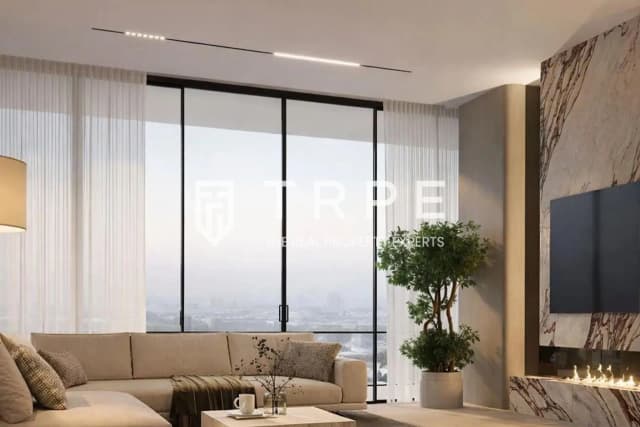
AED 1.6M
Vacant | 710 sq ft | Binghatti Avenue, Al Jaddaf
1 bed · 863 sq.ft

AED 2M
Resale at OP | Lagoons and Dubai Skyline Views | High Floor
1 bed · 788 sq.ft
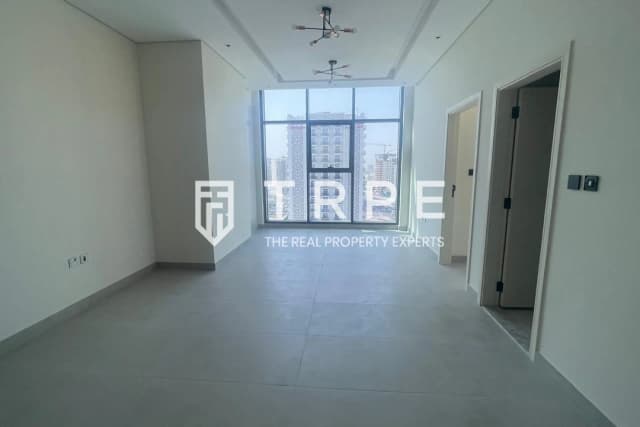
AED 110K/year
Community View | Upgraded | PG One, Al Furjan
1 bed · 830 sq.ft
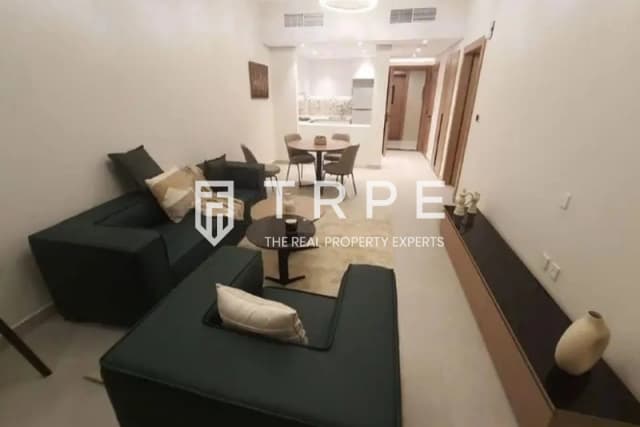
AED 75K/year
Furnished 1BR | Brand New | JVC District 16, JVC
1 bed · 862 sq.ft

Join our newsletter. No spam, unsubscribe anytime.
Contact
+971 50 523 2712info@trpe.aeQuick links to the most-searched combinations across Dubai.
TRPE Real Estate is a company registered in Dubai, United Arab Emirates. Trade License No. 999314 · RERA ORN 28357 · Office 1201, Ascott Park Place, Sheikh Zayed Road, Dubai. Regulated by the Real Estate Regulatory Agency (RERA).