The best property investment in Dubai depends on what you want it to do: pay you rent now, grow in value over years, or both. Ready apartments in mid-market communities are typically bought for income, off-plan and prime locations for growth, and no option gives both at once without a trade-off. This guide sets out the main routes, how to compare them on net return and what to check, without quoting yields we cannot source.
There is no single best investment, only the best fit for your budget, time horizon and tolerance for risk. Start with the question that decides everything: do you need cash flow from the property, or can you wait for the value to grow?
| Goal | Usual route | Main trade-off |
|---|---|---|
| Rent income now | Ready apartment in a mid-market community, let on an annual tenancy | Lower price growth potential; service charges and voids reduce income |
| Capital growth | Off-plan unit or a prime or developing location, held for years | No rent until handover; delay and market risk |
| Balance | Ready or near-complete unit in an established central area | Higher price for lower gross rent |
| Family tenants | Townhouse or villa | Higher entry price; fewer tenants at that price point |
| Short-term letting | Furnished apartment with a holiday home permit | More work, building rules and licensing |
Rent income pays you while you hold. It is easier to model because you can compare rents today. Our rental yields guide explains that mid-market communities such as Jumeirah Village Circle, Dubai Silicon Oasis, Arjan and Al Furjan tend to show higher gross yields, while Downtown, Dubai Marina, Business Bay and Dubai Hills Estate sit in the middle and Palm Jumeirah and Jumeirah Bay are bought mainly for the address.
Capital growth depends on the price at which you can sell, which nobody can promise. It tends to come from scarcity, new infrastructure and a community maturing, and it can also reverse. If your plan relies on growth, hold enough cash to wait through a weak year without being forced to sell.
| Signal | Points toward | How to check it |
|---|---|---|
| Few new units planned nearby | Growth, because supply is limited | Look at launches in the same community and the next two over |
| New roads, metro or schools | Growth, as the area becomes easier to live in | Official announcements, not agent claims |
| Many similar units already let | Income, because tenants already exist | Count live rental listings of the same type |
| Low service charge for the size | Income, because costs stay low | Service charge statements for two years |
| Master community still being built | Growth with delay risk | Developer record and handover dates |
No signal is a promise. Prices can fall as well as rise, and a hold that looks short on a spreadsheet can feel long if the market is weak. Hold a cash reserve so you are never forced to sell at the wrong moment.
Compare areas on rent evidence and running costs, not on reputation. Our community pages show current stock:
See what is on the market on our properties for sale page, or compare new projects on our off-plan projects page.
Advertised yields are gross: annual rent divided by price. What you keep is lower. Use this method for any property you consider:
A property with a higher gross rent can leave you with less than one with a lower rent and cheaper running costs. Our guide to how to check service charges before you buy shows where to look.
Copy this into a spreadsheet and fill in your own figures for each property. Use evidence for every line, such as signed leases, service charge statements and quotes.
| Line | Where the figure comes from |
|---|---|
| A. Purchase price | Offer or sale price |
| B. Purchase costs | DLD fee, trustee fee, title deed, commission, NOC |
| C. Total invested (A + B) | Sum of the two lines above |
| D. Annual rent collected | Signed lease or rents of comparable lets |
| E. Service charge | Latest statement from the building |
| F. Management and maintenance | Manager's quote and your repair estimate |
| G. Vacancy allowance | Weeks empty between tenants multiplied by weekly rent |
| H. Net annual income (D less E, F and G) | Calculated |
| I. Net return (H divided by C) | Calculated |
Registration costs are the same for an investor as for an owner occupier. On an illustrative AED 1,000,000 resale, a cash buyer pays the DLD registration fee of 4% (AED 40,000), the trustee fee of AED 4,000 plus 5% VAT (AED 4,200), AED 495 in title deed, map, knowledge and innovation fees, and agency commission, which is agreed in the contract and commonly 2% plus VAT (AED 21,000). That totals AED 65,695, or about 6.6% of the price, before any developer NOC. Because you need to earn those costs back, they set the shortest sensible holding period. Read the full breakdown in our Dubai Land Department fees guide.
| Question | Annual tenancy | Short-term or holiday let |
|---|---|---|
| Income pattern | Steady rent, fewer voids | Varies with season and bookings |
| Work involved | Low once let | High: guests, cleaning, check-ins |
| Permissions | Ejari registration | Holiday home permit and a building that allows it |
| Costs | Lower management fee | Higher management fee and furnishing |
| Rent rules | Rent increase rules apply | You set nightly rates |
Check the building's rules before you assume short-term letting is allowed. A yield calculated on nightly rates is worth nothing if the building prohibits it.
Off-plan can suit buyers who want a lower initial outlay and can wait for handover. You pay in instalments and carry delay and market risk until completion. The registration and escrow framework protects payments but not the timetable. Read whether off-plan property in Dubai is a good investment and our shortlist of best off-plan projects for investment. If you want residency, see how a residence visa by buying property works.
| Factor | Off-plan | Ready |
|---|---|---|
| Rent starts | After handover | As soon as it is let |
| Upfront cash | Deposit and instalments | Full price or deposit plus mortgage |
| What you can verify | Plans and the developer's record | Actual rent, condition and service charge |
| Main risk | Delay and market moves before handover | Vacancy and running costs |
Yes, in freehold areas. The Dubai Land Department states that freehold purchase is allowed for all nationalities, and non-freehold areas are limited to GCC nationals. Residents and non-residents can buy. Check the freehold status of the exact plot before you offer. Our why invest in Dubai real estate guide covers the wider case for the market.
| If you are | Consider | Check first |
|---|---|---|
| A first-time investor with a modest budget | A ready one bedroom or studio in a mid-market area | Net rent after service charge |
| Buying for a long hold | Off-plan in a master community, or a prime ready unit | Developer record and your ability to carry delays |
| Buying from overseas | A building with strong management and a clear rental record | Who manages and on what terms |
| Looking for family rentals | A townhouse or villa in an established community | Tenant demand at your price point |
The freehold and fee rules are published on the Dubai Land Department website. This is general information, not financial advice.
Buying or renting in Dubai?
Ask one of our agents on WhatsApp about renting in Dubai: areas, budgets and contracts.
Ask one of our agents on WhatsApp about renting in Dubai: areas, budgets and contracts.
It depends on your goal. Ready apartments in mid-market communities are usually bought for rent income, while off-plan units and prime locations are usually bought for growth. Compare net return, not headline yield.
There is no single best area. Mid-market communities such as Jumeirah Village Circle tend to show higher gross yields, central areas such as Downtown, Dubai Marina and Business Bay sit between income and growth, and prime locations are bought for the address.
Off-plan has lower upfront payments and growth potential but carries delay and market risk and earns no rent until handover. Ready property earns rent immediately and shows you the real building. Choose by cash flow need and time horizon.
Gross yield is annual rent divided by purchase price. For net yield, subtract service charges, management, maintenance and vacancy from the rent, and divide by the total you paid including fees.
The Dubai Land Department charges 4% of the sale value, plus a trustee fee of AED 4,000 plus VAT, a title deed fee of AED 250 and small administration fees. Resales also carry agency commission, and mortgages add 0.25% of the loan to register.
Yes, in freehold areas. The Dubai Land Department states that freehold purchase is allowed for all nationalities.
We cannot predict prices. Judge each property on its net income, its running costs, the supply around it and how long you can hold, rather than on market headlines.
Handpicked for you

AED 1.6M
Vacant | 710 sq ft | Binghatti Avenue, Al Jaddaf
1 bed · 863 sq.ft

AED 2.3M
Boulevard View | Premium Finishes | Prime Location: City Walk
1 bed · 789 sq.ft
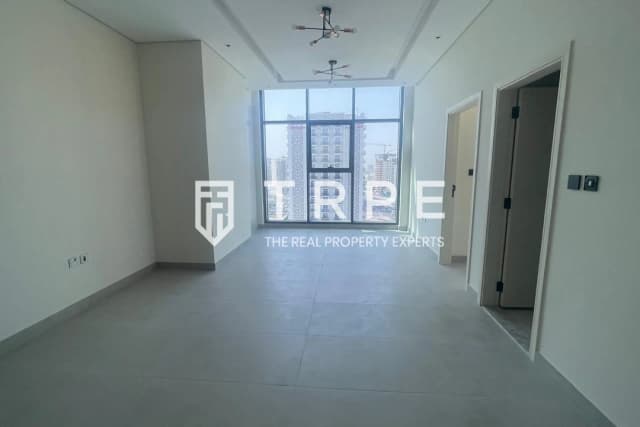
AED 110K/year
Community View | Upgraded | PG One, Al Furjan
1 bed · 830 sq.ft

AED 2M
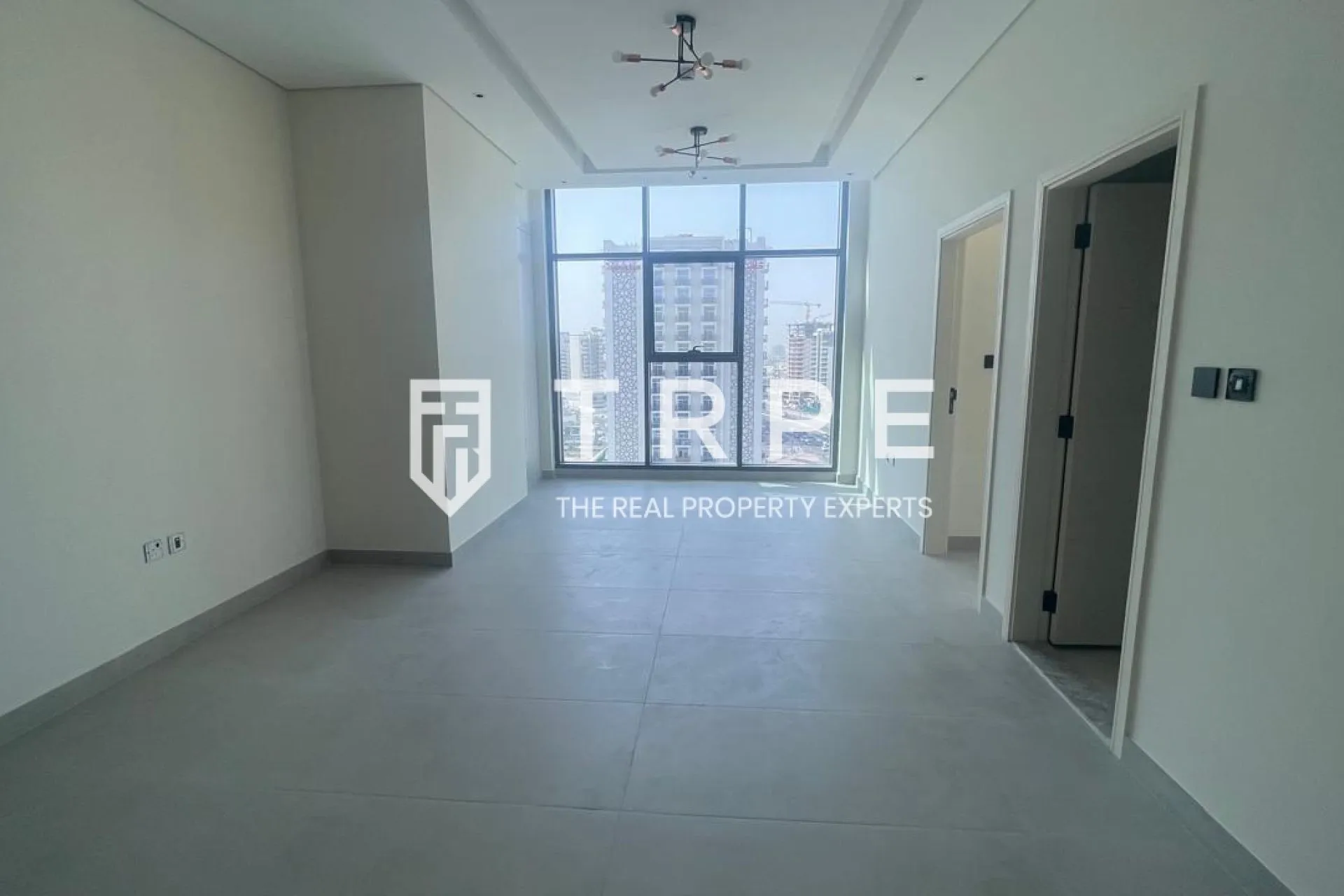
Resale at OP | Lagoons and Dubai Skyline Views | High Floor
1 bed · 788 sq.ft



Join our newsletter. No spam, unsubscribe anytime.
Contact
+971 50 523 2712info@trpe.aeQuick links to the most-searched combinations across Dubai.
TRPE Real Estate is a company registered in Dubai, United Arab Emirates. Trade License No. 999314 · RERA ORN 28357 · Office 1201, Ascott Park Place, Sheikh Zayed Road, Dubai. Regulated by the Real Estate Regulatory Agency (RERA).