A Dubai villa's yearly running costs are the community service charge, electricity and water from DEWA, cooling, the garden, the pool, air conditioning servicing and every repair inside the plot. The service charge is the figure people ask about, but it is usually the smaller part: the house itself, and cooling it, are your cost.
That is why a villa costs far more to run than an apartment of the same value. Service charges are lower per square foot, but the charge stops at your gate. This guide sets out each cost, how to look up the official service charge, and what owners most often forget. Checked November 2026.
| Cost | Typical range per year | Notes |
|---|---|---|
| Community service charge | Often around AED 3 to AED 8 per square foot | Lower than a tower, covers the community, not your house. Look up the approved rate for your community |
| Electricity and water (DEWA) | Rises sharply in summer | You pay to cool and supply a whole house, not one floor |
| Garden and landscaping | Ongoing | Irrigation, planting, waste |
| Pool maintenance | Ongoing where you have one | Chemicals, cleaning, pump repairs |
| Air conditioning servicing | Annual contract | Several units rather than one |
| Repairs inside the plot | Unpredictable | All yours, including the roof and the boundary wall |
The service charge range is a rough guide, not an official figure. The rate that applies is the one approved by RERA for your community, which you can look up as shown below.
Because a villa community charge covers the roads, parks, security and shared landscaping, and stops at your gate. In a tower the same charge covers the lifts, the chillers, the roof and the building fabric. In a villa all of that is your responsibility, so the low headline rate is not a saving, it is a smaller scope.
Under Dubai's jointly owned property law, Law No. 6 of 2019, service charges are paid into a dedicated bank account for the community, and RERA approves what they can be spent on. The law lists items such as managing, maintaining and repairing the common parts, and a separate cash reserve for emergencies and for replacing equipment in the common parts.
The key words are "common parts". The reserve pays for shared equipment, not for your air conditioning, roof or pool. For more on how the money is managed, read Mollak and Dubai service charges explained and owners associations and service charges.
There is no single figure, because DEWA bills electricity and water on what you use, and a villa uses far more in summer than in winter. A large villa in July is a serious bill, and a house designed with a lot of glass costs more to hold at temperature than the same floor area in a tower.
The useful number is what this house has actually cost. Ask the seller, or the landlord if you are renting, for the DEWA bills for one summer month and one winter month. Our guide to DEWA and chiller charges in Dubai explains the deposit, fees and how the bill is worked out.
The sinking fund equivalent. There is no reserve pot for your own house, so the air conditioning replacement, the roof and the pool pump all land as single large bills. Set money aside deliberately rather than treating each one as a surprise.
The second is cooling. Several air conditioning units working hard for five months cost money to run, to service and, eventually, to replace.
Use the Dubai Land Department's service charge index. It shows the service fees approved by RERA for jointly owned properties. On the DLD website or the Dubai REST app, choose the project name, the use and the year, and the index returns the approved rate. Multiply the rate by the area your charge is levied on, which the community manager can confirm, to estimate the yearly charge. Our step-by-step guide to the Dubai service charge index walks through it.
The owner pays the service charge. For repairs, Dubai's tenancy law, Law No. 26 of 2007, says that unless the parties agree otherwise, the landlord is responsible during the lease for maintenance and for repairing any defect or damage that affects the tenant's use of the property (Article 16). The tenancy contract usually sets who pays for utilities, the garden and the pool, and the split for minor repairs, so write it down. See who pays for what in a Dubai rental.
For jointly owned property, Law No. 6 of 2019 (Article 40) makes the developer liable for 10 years from the completion certificate for defects in the structural parts, and for one year from handover for defective installations such as mechanical, electrical and plumbing works. Ask the developer in writing which warranties apply to your villa and when they start, and report defects in the first year rather than waiting.
Ask for the last two years of service charge invoices, not only the current rate, so you can see the direction of travel. Check the approved rate on the DLD index. Ask what the previous owner paid DEWA in August. Ask the age of the air conditioning units, the roof waterproofing and the pool equipment. The sale needs a no objection certificate from the developer before the DLD registers the transfer, so confirm early that no charges are outstanding.
Read how service charges are set and how to look up any building and how much a villa costs in Dubai, then ask us about the specific community.
Buying or renting in Dubai?
Ask one of our agents on WhatsApp about buying in Dubai: areas, costs and the process.
Ask one of our agents on WhatsApp about buying in Dubai: areas, costs and the process.
Often around AED 3 to AED 8 per square foot per year, lower than an apartment tower because the charge covers the community rather than the building. The rate that applies is the one RERA approves, which you can look up in the Dubai Land Department service charge index. Everything inside your plot is your own cost.
Because the community charge stops at your gate. Cooling a whole house, maintaining a garden and pool, servicing several air conditioning units and repairing the roof are all owner costs that a tower service charge would cover.
You are responsible for it. Most owners use a monthly landscaping contract. Community rules usually require the front garden to be kept to a standard, so it is not optional in practice.
Often air conditioning replacement. A villa has several units, and replacing them is a single large bill. The community's reserve fund covers equipment in the common parts only, not the units in your house.
Yes. Ask the seller for the last two years of invoices and check the approved rate in the Dubai Land Department service charge index. The transfer needs a developer no objection certificate before the DLD registers it, so confirm early that nothing is outstanding.
Unless the contract says otherwise, Dubai's tenancy law (Law No. 26 of 2007, Article 16) makes the landlord responsible during the lease for maintenance and for repairing defects that affect the tenant's use. Many contracts give minor repairs, the garden and the pool to the tenant, so check the wording.

Own a home in Dubai? See what it is worth.
Free, instant valuation from real DLD transactions.
Handpicked for you
AED 1.6M
Vacant | 710 sq ft | Binghatti Avenue, Al Jaddaf
1 bed · 863 sq.ft

AED 2M
Resale at OP | Lagoons and Dubai Skyline Views | High Floor
1 bed · 788 sq.ft
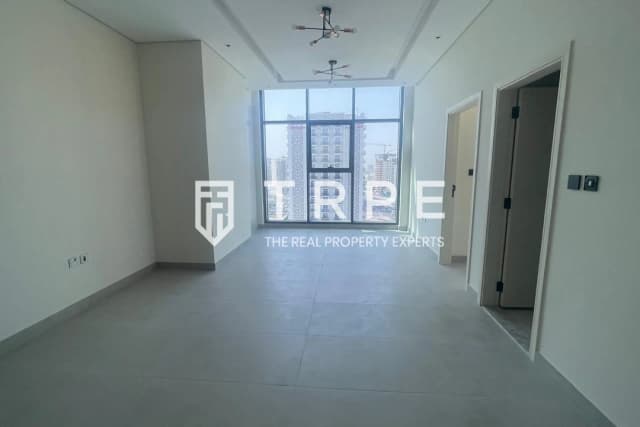
AED 110K/year
Community View | Upgraded | PG One, Al Furjan
1 bed · 830 sq.ft
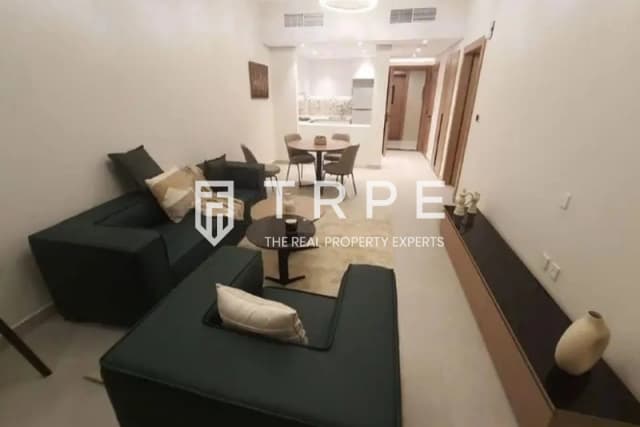
AED 75K/year
Furnished 1BR | Brand New | JVC District 16, JVC
1 bed · 862 sq.ft

Join our newsletter. No spam, unsubscribe anytime.
Contact
+971 50 523 2712info@trpe.aeQuick links to the most-searched combinations across Dubai.
TRPE Real Estate is a company registered in Dubai, United Arab Emirates. Trade License No. 999314 · RERA ORN 28357 · Office 1201, Ascott Park Place, Sheikh Zayed Road, Dubai. Regulated by the Real Estate Regulatory Agency (RERA).