You can buy an apartment in Dubai on installments in two main ways: pay the developer in stages under a payment plan, or borrow from a bank and repay the loan monthly. Developer plans are mostly offered on off-plan homes, with the balance tied to construction milestones and sometimes continuing after handover. For a ready to move in apartment, a payment plan is only possible when the developer is still selling a completed unit; a resale from another owner is paid in cash or with a mortgage. This guide covers every route, what each costs, the rules that protect your money and what to check before you sign, as of November 2026.
There are five routes to owning a Dubai home without paying the full price on day one. They differ in who you pay, when you get the keys and how the purchase is registered with the Dubai Land Department (DLD).
| Route | Who you pay | When you get the keys | Works on ready homes? | How it is registered |
|---|---|---|---|---|
| Off-plan payment plan | The developer, in stages linked to construction | At handover | No | Oqood (provisional register) until completion |
| Post-handover payment plan | The developer, before and after handover | At handover, while instalments continue | Only on new projects | Oqood, then title deed under the developer's terms |
| Developer plan on a completed unit | The developer, on a schedule it sets | On signing or on an agreed payment | Yes, if the developer still owns the unit | Set out in the sale contract |
| Bank mortgage | The seller in full, then the bank monthly | On transfer day | Yes, including resale | Title deed in your name, mortgage registered by the bank |
| Lease to own through a financier | The financing party, as rent | On registration of the contract | Yes | Lease To Own contract registered with DLD |
The first three are developer payment plans. The last two are finance products, and they are the only installment routes for a resale home. Off-plan apartments with live plans are listed on our off-plan projects page, and ready homes are on property for sale in Dubai.
When you buy on a developer payment plan, you sign a sale and purchase agreement (SPA) with the developer and pay a booking deposit to reserve the unit. The rest of the price is split into installments. On an off-plan project these are usually linked to construction milestones, such as the completion of foundations, the structure, finishing works and final handover. Some developers use fixed dates instead, monthly or quarterly.
Plans are written as splits. A plan described as 60/40 means 60 percent of the price is paid during construction and 40 percent on or after handover. A post-handover plan moves part of that last share past the handover date, so you get the keys and keep paying the developer for an agreed period. Each project sets its own split and schedule, and terms change from launch to launch, so the only reliable figures are the ones in the SPA you are offered. Our guide to how off-plan payment plans work in Dubai explains construction-linked and post-handover plans in detail, and Emaar payment plans explained shows how one large developer structures them.
The off-plan sale is registered in the DLD's provisional register, known as Oqood. Under the DLD's initial sale service, the SPA must be registered within 90 days of signing. On the official fee schedule, the registration fee is 2 percent of the sale value from the seller and 2 percent from the purchaser, plus AED 10 knowledge and AED 10 innovation fees (as of November 2026). Check in the SPA who pays which share. When the building is finished, the Oqood registration converts into a title deed; see title deeds and Oqood in Dubai explained. If you want to understand why ownership itself is a sound long-term asset, read about the Benefits of Owning Real Estate Properties in Dubai.
Yes, but only in two situations. The first is a developer that still owns completed, unsold units and chooses to sell them on installments. The second is a recently handed over project where the developer offered a post-handover plan, so buyers moved in while still paying. In both cases you are buying from the developer, not from a private owner.
Once a property changes hands on the secondary market, from one owner to another rather than from the developer, any installment plan does not transfer with it. The developer is not a party to that sale, so a resale purchase is normally paid in cash or with a mortgage. If a payment plan matters to you, the surest way to get one is to buy directly from the developer, whether the unit is still under construction or already built and unsold.
That makes the search for "ready property with payment plan Dubai" narrower than it looks. Ask the agent or developer three questions before you get attached to a unit:
If none of the ready homes you like are sold by a developer, a bank mortgage is the installment route for a ready apartment. It works on any freehold home, new or resale.
A mortgage lets you pay a deposit, receive the title deed on transfer day and repay the bank monthly. The UAE Central Bank sets the maximum loan to value (LTV) for every bank. Its Regulations Regarding Mortgage Loans (Article 3, in force) set these limits:
| Buyer and property | Maximum loan | Minimum deposit |
|---|---|---|
| Expatriate, first home, value under AED 5 million | 80% of value | 20% |
| Expatriate, first home, value over AED 5 million | 70% of value | 30% |
| Expatriate, second home or investment property | 60% of value | 40% |
| UAE national, first home, value up to AED 5 million | 85% of value | 15% |
| UAE national, first home, value over AED 5 million | 75% of value | 25% |
| UAE national, second home or investment property | 65% of value | 35% |
| Any buyer, property bought off-plan | 50% of value | 50% |
The same rules cap the term at 25 years and keep total monthly debt repayments to 50 percent of gross income. Expatriates can borrow up to 7 times annual income and UAE nationals up to 8 times. Repayments must be made at least quarterly. Banks also charge their own fees and the DLD charges 0.25 percent of the loan to register the mortgage. Our guide to getting a mortgage in Dubai as an expat walks through the application, and Dubai mortgage rates for expats covers fixed and variable rates.
The DLD also registers Lease To Own contracts between the seller, the buyer and a financing party. The buyer pays the financier in installments as rent and becomes the owner at the end. This is the structure some Islamic home finance products use. Registration needs a lease letter from the bank showing the rent and the start and expiry dates, and the developer's no objection certificate. The DLD fees are 2 percent of the sale value from each side, 0.25 percent of the rental value and the usual title deed and map fees (as of November 2026).
Foreigners can own property in Dubai's designated freehold areas, outright or on leasehold of up to 99 years, under Law No. 7 of 2006. You do not need to live in the UAE: the DLD accepts a valid passport for non-resident foreigners when it registers a sale. A developer payment plan has no bank behind it, so the developer decides who qualifies. Most simply need a passport, the booking deposit and the ability to keep up with the schedule.
A mortgage is different. The bank assesses your income, other debts and age against the Central Bank limits above, and each bank sets its own criteria for non-residents. The full steps for overseas buyers are in our guide to buying property in Dubai as a foreigner.
Most of Dubai's large master developers sell new projects on payment plans. Emaar is the best known, with projects across Downtown Dubai, Dubai Hills Estate and Dubai Creek Harbour. Nakheel is behind Palm Jumeirah and other waterfront communities, and Nakheel plans are typically linked to construction stages. Dubai Properties also sells new phases of its communities on staged payments.
Meraas developed lifestyle districts such as City Walk and Bluewaters, and Sobha Realty focuses on luxury homes with high-end finishes. The exact split, the deposit and whether a post-handover period is offered differ by project and launch, so compare the plans side by side and check each developer's track record first. Our guide on how to check a developer before buying off-plan shows what to look up on DLD records.
Off-plan installments are not paid into the developer's general account. Under Dubai's escrow law, Law No. 8 of 2007, a developer must be entered in the DLD's Register of Real Estate Developers before it can operate, and every developer selling units off-plan must open an escrow account with an approved escrow agent. The account is opened in the name of the project and is dedicated exclusively to building that project. Each project must have a separate account, and the developer's creditors cannot attach the money in it. The escrow agent reports the account's revenue and spending to the DLD.
In practice this means you should only ever pay into the project's escrow account named in your SPA, never into a personal account or a sales office account. Ask for the escrow account details in writing and check that the project and developer appear on the DLD's records. If a project runs late, your rights are covered in our guide to off-plan handover delays.
| Developer payment plan | Bank mortgage | |
|---|---|---|
| Lender | The developer | A UAE bank |
| Interest | Usually none quoted; check the SPA for charges | Charged on the loan |
| Term | Until handover, plus any post-handover period | Up to 25 years |
| Payment size | Larger, less frequent installments | Smaller monthly repayments |
| Income checks | Set by the developer, often light | Central Bank limits, 50% debt burden cap |
| Ready resale homes | Not available | Available |
| Main risk | Construction delay, penalties for late payment | Interest rate changes, bank fees |
A developer plan is usually cheaper in total because no bank interest is charged, but the installments are bigger and come faster. A mortgage costs more over its life but spreads the price into smaller monthly amounts and works on any home. Many buyers combine them: pay the developer during construction, then take a mortgage for the share due on handover. If you plan to do that, get a mortgage pre-approval early so a change in your income does not leave a gap at handover. The choice depends on your cash flow, your long-term plans and how much risk you can carry.
The most common mistake is assuming a resale listing comes with a payment plan because it once had one. Ask whether the remaining installments are owed to the developer and whether the developer has agreed to the transfer. Another is ignoring extra costs, such as service charges and connection fees, which start at handover even if you are still paying installments.
Buyers also misjudge post-handover plans. You hold the keys, but you still owe the developer, and the contract decides when the title deed is issued in your name and whether you can sell or mortgage the home before the final installment. Finally, do not choose a property solely for its payment terms. A good deal is about what you are buying as much as how you pay for it. For the wider process, read the Complete Guide to Buying Real Estate in Dubai.
The same routes apply to every property type. Villas and townhouses are sold on developer plans in new master communities, and the villa specific routes are set out in our guide to buying a villa in Dubai on instalments. Studios and one bedroom apartments are sold on the same plans, and ready ones can be browsed on apartments for sale in Dubai. On any type, a mortgage on an off-plan home is capped at 50 percent of the value, so off-plan buyers rely on the developer plan for most of the price.
You can usually sell an off-plan unit before handover once you have paid the minimum percentage the developer requires, subject to developer and Dubai Land Department approval, and the remaining installments transfer to the new buyer. Our guide to selling an off-plan property before handover covers the approval process and the costs involved.
TRPE is a Dubai real estate brokerage covering sales, leasing, off-plan and property management. If you are comparing payment plans, or weighing a plan against a mortgage on a ready home, an agent can set the schedules side by side so you can see what you would pay and when.
Buying or renting in Dubai?
Ask one of our agents on WhatsApp about buying in Dubai: areas, costs and the process.
Ask one of our agents on WhatsApp about buying in Dubai: areas, costs and the process.
Buy off-plan or a completed unsold unit directly from a developer on a payment plan, or buy any ready home with a bank mortgage and repay monthly. Developer plans split the price into installments linked to construction or set dates, while a mortgage lets you pay a deposit and repay the bank over up to 25 years.
Only when the developer is the seller, either a completed unit it has not sold yet or a new building where it offered a post-handover plan. A resale from a private owner does not come with a payment plan, so it is paid in cash or with a mortgage.
On a developer plan, the developer sets the booking deposit, so it varies by project. With a mortgage, UAE Central Bank rules mean an expatriate buying a first home under AED 5 million needs at least 20 percent, and any buyer of an off-plan home can borrow no more than 50 percent of the value.
Usually yes, because developer plans normally carry no bank interest. The trade off is larger installments paid over a shorter period. A mortgage costs more in total but spreads the price into smaller monthly repayments and works on resale homes.
Off-plan payments must go into an escrow account opened in the name of the project under Dubai Law No. 8 of 2007. The account is dedicated to building that project and the developer's creditors cannot attach it. Only pay into the escrow account named in your sale and purchase agreement.
The sale and purchase agreement sets the penalty, which may be a fee or a percentage of the overdue amount. Repeated defaults can lead to cancellation and the loss of part of what you have paid, so read the default clauses before signing and talk to the developer early if you expect a problem.
Yes. Foreigners can own freehold property in designated areas of Dubai, and the Dubai Land Department accepts a valid passport from non-resident buyers. Developer plans are open to most buyers who can pay the deposit, while banks apply their own criteria to non-resident mortgage applicants.
Handpicked for you

AED 2M
Resale at OP | Lagoons and Dubai Skyline Views | High Floor
1 bed · 788 sq.ft
AED 110K/year
Community View | Upgraded | PG One, Al Furjan
1 bed · 830 sq.ft
AED 1.6M
Vacant | 710 sq ft | Binghatti Avenue, Al Jaddaf
1 bed · 863 sq.ft
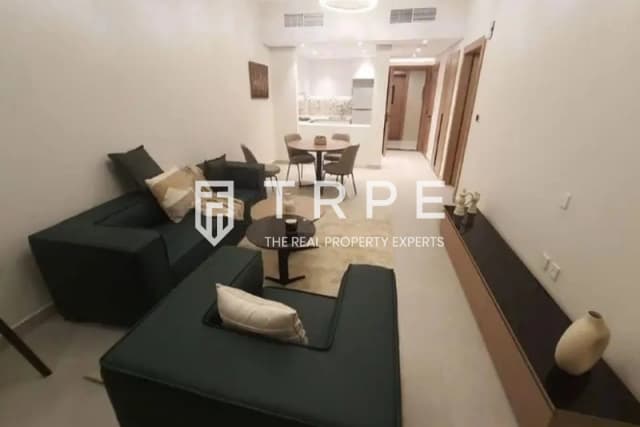
AED 75K/year
Furnished 1BR | Brand New | JVC District 16, JVC
1 bed · 862 sq.ft

Join our newsletter. No spam, unsubscribe anytime.
Contact
+971 50 523 2712info@trpe.aeQuick links to the most-searched combinations across Dubai.
TRPE Real Estate is a company registered in Dubai, United Arab Emirates. Trade License No. 999314 · RERA ORN 28357 · Office 1201, Ascott Park Place, Sheikh Zayed Road, Dubai. Regulated by the Real Estate Regulatory Agency (RERA).